Leamside
Investment
Corridor
The energy
to grow
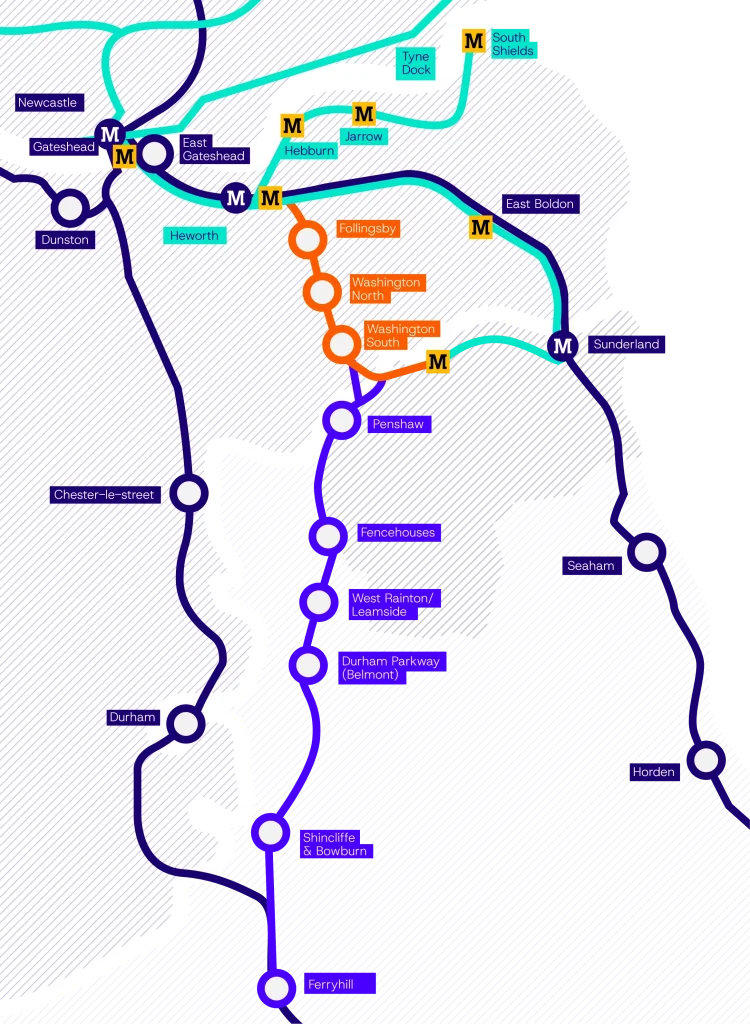
North East England’s largest growth opportunity, driven by the reintroduction of the Leamside Line, which will reconnect Gateshead to Ferryhill and the East Coast Main Line, unlocking economic potential, enhancing connectivity for both passengers and freight.
Backed by the Strategic Authority, targeted planning and early-stage masterplanning aim to attract investment and guide development. The corridor will boost accessibility, support mixed-use regeneration, and link new housing with major employment hubs like Newcastle Airport, the Port of Sunderland and NETPark, and follows on from similar success with the Northumberland Line economic corridor stimulating growth in the north of the region.
Phase 1 Update – Metro to Washington:
June 2025 saw the Mayor announce that development and construction of the new line will go ahead, with much of the cost met through devolved transport funding from Central Government. The Mayor’s deal will provide a major boost towards meeting the total cost of Metro to Washington, with the whole final funding package also expected to include private sector funding.
Phase 2 Update – County Durham link, from Washington to the East Coast Main Line:
The UK government confirmed in January 2026 that development work on the 21-mile Leamside Line will proceed as part of the Northern Powerhouse Rail (NPR) initiative. The agreement to reopen the Line has been signed by the transport secretary, subject to delivery of good value for money. Further development work on the Leamside Line, which runs from Pelaw in Gateshead to Tursdale in County Durham, is set to progress as part of the Northern Powerhouse Rail (NPR) initiative.
Phase 1 next steps:
Extends the Metro to connect Washington (one of the UK’s largest towns without rail) with Newcastle and Sunderland, using the Northern section of the Leamside Line.
Phase 2 next steps:
Reopens the southern section of the Leamside Line to connect with the East Coast Main Line at Tursdale, unlocking capacity for the national rail network, and transforming connectivity for Sunderland and County Durham to drive growth in housing and economic development.